

The First Step Toward Safer Air
Radon is invisible and odorless. Testing is the only way to know your home’s radon level.
Once you have your results, Mitigation Masters is ready to install a system that keeps your family safe.
How to Test Your Home for Radon
Testing your home for radon is quick, affordable, and something every Michigan homeowner can do themselves. Since Mitigation Masters focuses on installation and mitigation, here’s how to get a reliable test before calling us.
Where to Get a Radon Test Kit
You have two easy, inexpensive options:
1) Pick Up a Low-Cost or FREE Test From a Michigan Health Department
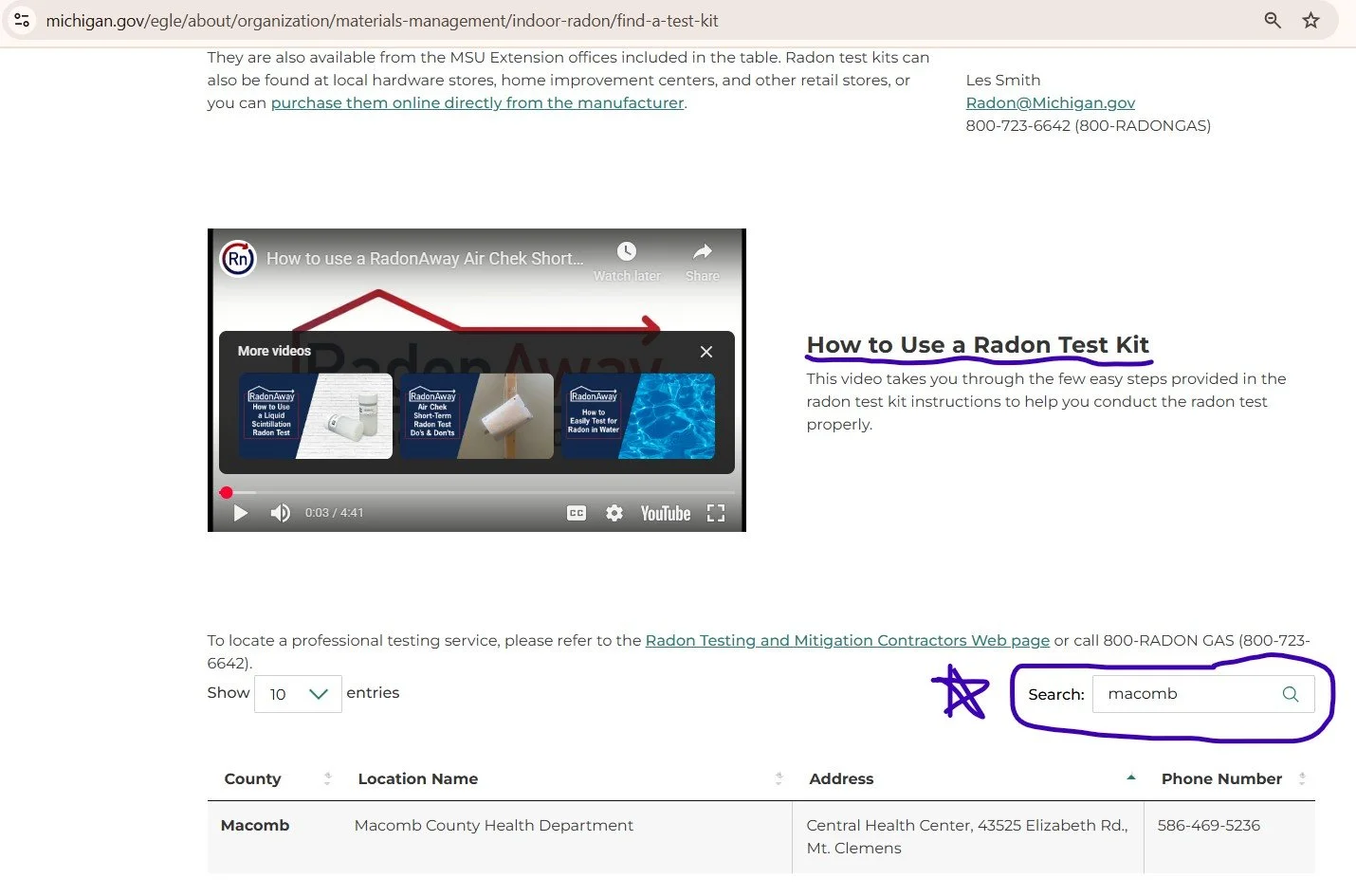
Many Michigan county health departments offer low-cost or even free radon test kits, especially during the winter testing season-this is often the cheapest and easiest option for homeowners.
Visit the website here and navigate to the county search section. Enter your county to locate the corresponding address and phone number, and verify whether they offer free radon testing.
*See the picture to the left.
2) Buy an At-Home Test Online or In-Store:
Click on store names to purchase test online: Amazon, Home Depot, Lowe’s, Radon.com
Most EPA-approved kits cost $15–$30, including the lab fee.
Short-Term vs. Long-Term Tests
Short-Term Tests (2–7 days)-Most common- Quick snapshot of radon levels- Great first step
Long-Term Tests (90+ days)- More accurate- Best if your short-term test is borderline
Either option will tell you if your home needs mitigation.
Understanding Your Results
Radon levels are measured in pCi/L:
4.0 pCi/L or higher → Mitigation recommended
2.0–4.0 pCi/L → Consider mitigation
Below 2.0 pCi/L → Generally low
If your levels are high, a mitigation system can reduce radon by 80–99%.
Why Testing Matters in Michigan
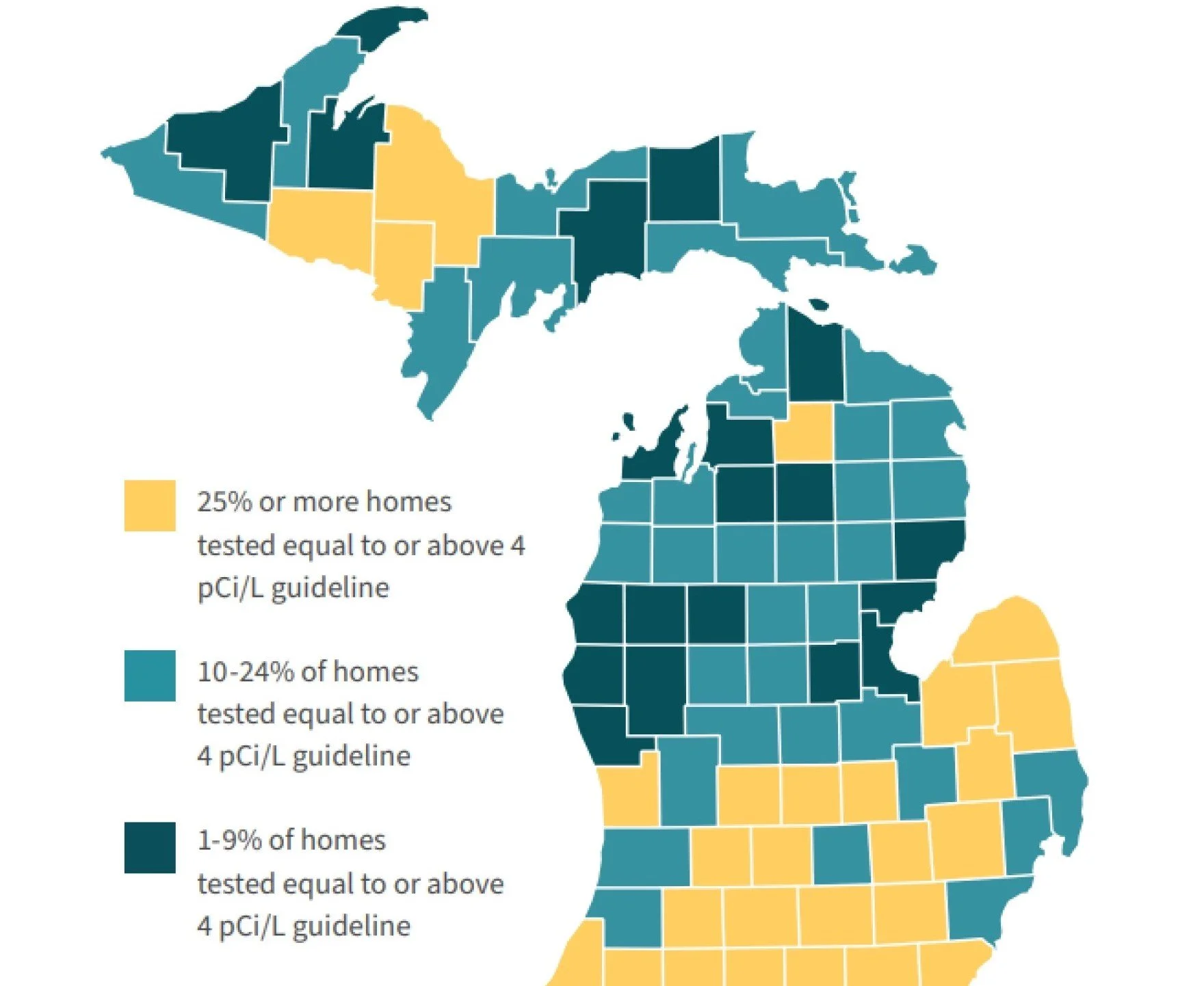
Southeast Michigan has some of the highest radon levels in the state, and radon varies from home to home — even next door.
Most counties recommend testing every 2–3 years, or after major renovations.